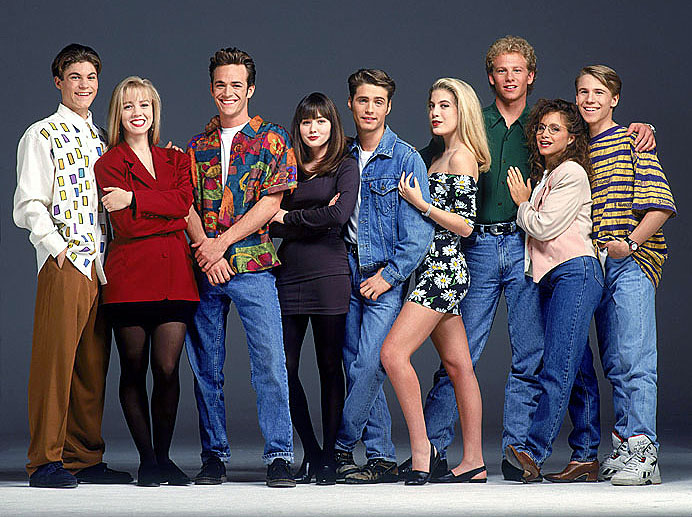
To give off the realism of a coming-of-age indie teen movie, it is highly important to use the right type of costume. A typical indie costume design doesn't necessarily need to have a high budget, as in most cases you could get away with a flannel and a t-shirt.Most importantly, you need to recreate the fashion of the time your film is set in. 80's based teen movies look into the denim era, and neon clothing. If you wanted to achieve an 80's look, the best way to go is light wash denim and white trainers.
Whereas, in the 90's, teens were into the urban grunge look, where their clothing primarily consisted of black leather jackets, denim jeans, and flannels. However this was more so late 90's. Early 90's did in fact show similarities to the 80's... Baggy clothing was very popular with both boys and girls.
OUR MOVIE COSTUME IDEAS:
To achieve a typical coming-of-age teen movie set in 2016, we will take into account the clothing used now and what suits the characters best. There are three main characters, "Sam" who will be played by myself, Sam is the main characters best friend, typically a rebellious teen who is not afraid to be herself, her costume will look into denim jackets or jeans, a grunge kind of look. The main character, "Lola" played by Luiza Paulielo will portray the typical not so popular teen who hides herself from popularity and socials. Her dress sense will possibly be innocent and girly, however with a hint of the style in 2016. The last character is "Ricky" played by Rodrigo Pintos who will play the love interest. He will dress close to the actors dress sense, with a stylish tint from modern day teens.
Usually, "Teen indie Coming-of-Age"movies tend to vary around 12A and 15, this all comes down to the amount of sexual references, nudity and explicit language used.
I recently read an article that spoke about the movie Diary of a Teenage Girl which "attacked" the film's 18 certificate. Having seen this movie myself a few times, I can identify why it was chosen to be rated R / 18. There are several references and displays of sex, and most likely the "relationship" between the teenager and her mother's boyfriend does help portray the 18 certificate.
The article reads:
"According to a statement from the film makers, the sexual relationship between the 15-year-old-protagonist and the 35-year-old boyfriend of her mother, is the main cause for concern"
"Sexuality is something we're both experiencing and so if one side's perspective is reflected, the other side should be reflected too. Women's stories should be explored and celebrated too."
However, DOATG aside, most teen films lock onto the 15 rating, as they are more so intended for and older audience. The ages 16-25 are the main audience for movies so films tend to lay around the 15 certificate mark. Whereas, films that feature well known actors or directors usually want to rely on the 12 certificate to breach a wider audience, meanwhile, independent movies look at a 15 mark as they are free to express more ideas knowingly that a specific audience will appeal.
Movie Poster Analysis for Coming of Age Teen Movies
Little Birds is an indie coming of age film about a dysfunctional teen who meets a group of boys and gets into a lot of trouble, dragging her bestfriend along with her. This movie poster is successful in the sense that we are aware of the genre of this movie through the facial expressions portrayed. The way the girl on the left is looking at the protagonist makes it evidence of the one sided relationship, we can tell that they love eachother, however she is closed off and selfish. Coming of Age Dramas commonly use this effect of broken friendships and mentally unstable protagonists.
The large print font of the Title "Little Birds" is effective as its simplicity makes it strong as a whole. The use of a small slogan beneath the title "How far would you go?" suggests it dramatic nature in the film, and that there are obstacles that these characters over go.
The layering of the characters leg over the titles at the bottom of the poster create dimension and suggest professionalism. I think that the colour scheme is very well though out for this piece of work, and overall it is a very successful film poster, of which we will be picking out features to portray in our own work,
Movie Poster Analysis for Coming-Of-Age Teen Movies
Turn me on, Goddammit!:
The use of drawing-like features and sketches appeal to a younger audience, which this genre is primarily aimed at teenagers and young adults. This is evident through the description of the Movie and its title. The colours used represent youth and life as they are bright and simple. The use of a review at the top of the poster implies its success and that it may be good, alluring an audience.
Movie Poster Analysis for Coming-Of-Age Teen Movies
The Way Way Back:
The use of the protagonist being underwater meanwhile the rest of the characters surround him beneath the surface, suggest that this character is some type of a loner, he is isolated from his friends and family, also suggesting he is in a situation/ place he does not wish to be in. The use of the slowly progressed enlarging of each word of the title creates emphasis on the " Way Way" part. They have interestingly added the actors name beneath each other, as opposed to the conventional way of side by side, this suggests the films quirkiness, and difference. By using big Movie Titles that were made my by the same makers of this movie, make it open to a wider audience, those who are fans of those movies, and those who are interested in the cast and genre of this movie, of which is all evident in the poster.
Soundtrack Research - The perfect sound for a Coming-Of-Age Film
Why is music so important when it comes to film-making?
Some may say, the "mood is in the music", this is most probably true. For instance, if you were watching a trailer thats genre was a comedy, it would be unlikely that soft orchestral music would be playing, unless it was done ironically and for comedic purposes...
Many "indie" trailers using consist of up beat mellow pop, which brighten up the trailer and conform to its stereotypical sound. I have watched several coming-of-age films and it's safe to say that s majority of them do in fact use up-beat music, usually acoustic guitar strumming or finger-picking, with xylophones or string instruments.
Movie Poster Analysis for Coming of Age Teen Movies
Kings of Summer:
Kings of Summer is a coming of age teen movie that follows a group of young boys on their voyage of life and independence.
This movie poster conforms to a summer based movie,this is evident through the title, slogan, and location. Typical indie teen movies have a hand written type of font as their title.
"Why live when you can rule" is used successfully to captivate the audience and capture a freedom-filled movie. The scenery insinuates growth and independence,evident through the nature and light. The use of the three characters jumping into the water signifies their youth and how they overcoming this, it shows the freedom they have.
The layout of the poster is appealing to a younger audience, along with young adults, as we are introduced to teen characters displaying fun. The use of the "Sundance Festival" logo infers its excellence and anticipation. Reviews almost always imply the quality of the movie and make it more likely for people to go and see the film. It is shown effective using known references on the poster.
Movie Poster Analysis for Coming of Age Teen Movies
DOPE:
Dope is a film following the life of a high school senior and his 90's hip-hop influenced best friends, along the way facing life issues of growing up, friendship and felonies.
This movie poster conforms to a typical high school coming of age story as they usually consist of three friends. The clothing portrayed suggests that they are young, this is also evident in their props, bikes and backpacks. The location is evidently Los Angeles as we are introduced to the famous palm trees in the background. The font for the title "DOPE" is very modern, however old school, which is used successfully as their friendship is built over their love for 90's hip-hop culture, it also connotes music, as the style is similar to what a DJ would use.
A typical coming of age movie consists of an unlikely less popular character, this is also evident as beneath the title we have the slogan "It's hard out here for a geek" which successfully portrays the hardships of popularity. Also, the use of "here" allows the audience to sympathise with this as it is said in a way that you could personally say, as if you were to say it.
The composition within this movie poster is very successful as the trunks of the palm trees give off depth within the picture, and the colours used appeal to younger audiences as they are bright and lively.
Brotherhood is the final film to Noel Clarke's Kidulthood trilogy. It focuses on a majority of the same characters however 8 years later. In this trailer, it begins with an establishing shot of the city of London's skyline, with the non-diegetic narration of the main character, "Time's change....People change". This is very effective as it makes the audience aware that the basis of this movie may be different to the first two, exploring an insight to Sam's new life. We are shown a contrast when he says "times change", as a quick shot of a party is flashed on screen then followed with a close up shot of the character Sam holding a family photograph as the narration says "people change". Therefore, showing his maturity has progressed and he is supposedly a different person. The use of non-diegetic sound of loud thuds are progressed to emphasise the cut to the next shot and also enhance the intensity of the trailer, immediately telling the audience this is no comedy or romance.
Narration is used very successfully throughout the trailer as it is done to, in a way, not only help the audience understand briefly give an insight the movie as the last one came out 8 years ago, but to also exaggerate the seriousness of it all. The trailer uses brief jump cuts between scenes in which we can ultimately identify something bad has happened or is going to happen. All this is progressed while non-diegetic sound rises until it comes to a hault as the shots stop flashing, and we are shown a sudden shot of a man holding a gun. Narration then continues as we are introduced to the institution logo of "Lionsgate" along with the start of non-diegetic background music, which basically brings the trailer together. This is then followed by continuous shots of different locations and characters with the diegetic sound of one of the characters that we see saying "I have a little problem with your son" which is actually in the movie as i have seen it for myself. Emphasised sound effects are used to intensify the situation and its shots.We are introduced to a new character who is shown to be a "pimp" as he is surrounded by many girls and is well dressed with a sufficient amount of money, also as it is evident that he is trying to make a deal with the main character Sam. This is then cut to a funeral scene as he asks the man who is messing with his family, inferring a sudden death of a family member, and references to threat in the following shot.
The use of british grime as background music adds to the realism of the movie and the whole feel of inner city London. The use of costume throughout the movie is based around tracksuits and athletic clothing, implying british gang culture. We are aware of the rating of this movie as we are shown a brief shot of a man getting stabbed. This is all while the "pimps" diegetic sound of his voice talking about his street cred and how he is not to be messed with, thus showing his power in the movie.He proceeds to explain what he does and asks Sam "Do you know what that makes me?" in order to show authority and superiority, however this is juxtaposed as the non-diegetic sound cuts off and Sams reply is "a Cunt.", adding a sense of humour to the trailer which makes it slightly more appealing.
The non-diegetic music is then transitioned into a much more hyped sound as we see shots of criminal acts and danger. However this is all contrasted as jump cuts of Sam with his family are shown, and the narration of his wife saying "You say you want to protect this family" thus inferring he is in grave danger and is doing all he can to look after his children and wife, despite all the crime that lingers on.
These multiple shots of crime and family then lead to a scene in a kebab shop as the owner is shown to hold a machette-like weapon against a youth, while the non-diegetic sound cuts off as he says "You want me to cut him? I'll turn him into savaloy. Drunk white man will never tell" also adding a sense of humour to lighten up the vibe of the trailer only slightly. This is then followed by rap lyrics in the non-diegetic sound which conforms to british gang culture and is much suited to the trailer, meanwhile shots of black men in balaclavas are shown.
"First came Kidulthood" appears on a black screen with a gun shot sound, which is then followed by several shots until "Then came Adulthood" appears, then finally the anticipation and intensity is enhanced as the music gets louder and shots become quicker while in between shots it reads "In the end came Brotherhood" one word at a time. This is shown effective as it is very dramatic and also is done to make engage the viewer and make them likely to watch the film.
Nocturnal Animals shows a link between both opening and closing shots, there is a voice over type narration, which asks the audience a question. The use of city skyline shots help set the location and make the audience aware of the location. Cold, steel blue cinematography is used to emphasise the thrill of the movie, along with a dash of deep red here and there..
Close up shots of eyes are used excessively which emphasises the innocence and vulnerability within the film. The use of quick flash through shots infers the action and Adrenalin in the film, There are references to the films title, both verbally and visually, which is used to show a realistic approach.
There is a supernatural/ alien like "finger tapping" shot, which introduces confusion, surrealism which also intrigues the audience, with its sinister feel. Glass and water drops infer life and health, the innocence and vulnerability, however also connoting danger, as the character is shown behind the glass.
Jump cuts used relate to the tempo of the string music which helps put the trailer together and let it flow well, also adds to the intensity and thrill. There is lack of diegetic sound other than the use of dialogue, which insinuates that this film focuses on visuals and narration as opposed to background music or other sounds, its the type of movie that you may have to watch carefully to understand it well. There is non-diegetic use of "booms" and "wooms" which exaggerates the intensity and flow of the trailer.
The representation of women is shown as calculating, whereas men are shown as vengeful. The women seem to be much more scheming and intelligent than the men, as they are shown by their actions.
The genre is thriller this is evident as the narrative used helps emphasise or infer that the past is coming back to haunt someone,,,
The trailer for La La Land, starring established on-screen pair of Emma Stone and Ryan Gosling (see Crazy, Stupid, Love + Gangster Squad) paints it as a prestige picture in the vein of early Hollywood cinema This is evident immediately with the circular fade in to a shot of a Los Angeles boulevard and is the genre is committed to throughout with its vibrant colours and varied imagery, some even fantastical in nature such as the moments where Stone and Gosling's characters seem to levitate into the air. Director Damien Chazelle utilises a number of techniques regarding cinematography for instance lens flares which lend a stylistic sheen to the image, while a particular shot, that of the couple in an aerial tram in the foreground exploits depth to great effect with the city skyline in deep focus in the background, remiscient of the shots in Orson Welle's 'Citizen Kane'. The music of the trailer is a single track,a song taken from the film suggesting that is in fact a musical, drawing even closer comparisons with the golden era of Hollywood cinema with films such as 'Singing in the Rain'. The lyrics often tie in neatly with what is seen on screen, Stone singing "inside a frame" while the visuals seem edited to resemble grainy film stock and "here's to the mess we made" accompanying a succession of shots featuring the couple looking forlorn. The climax of the trailer is particularly evocative of the romance genre, with title cards showing the two actor's names each followed by an image of them before their display of affection - a great big kiss. No one else in the film is focused on, merely alluded to, such as John Legend's character; the focus is obviously on the couple at the heart of the picture.
Mention representation, genre, narrative, mise-en-scene, camera, editing and sound in your approach to analysis of trailers to add to posts and evaluate those in your chosen genre. Magazines and posters need to be analysed further - push yourself and evidence your high ability.
Empire is a well known film magazine, that revolves around the marketing, and endorsement of upcoming films, including reviews and interviews. In this cover, we are shown the character "Harley Quinn" overlaying the Empire logo. This is done to advertise the upcoming movie "Suicide Squad". The use of this character intrigues the audience to read this magazine, which is likely to include an excessive amount of promotion for the movie in this copy. Most of Empire Magazine's front covers include a colour scheme to match the character or actor shown on the cover, and various slogans and celeb name grabbers. Composition is a key factor of a successful magazine cover. A well composed cover leads to more buyers and a larger audience who will want to read on. This also helps celebrity endorsement and movie promotion. In-action shots of characters are a good way to give a taster to the movie as we see the character brought to life. Also, simplicity in a magazine cover keeps it brief and rather engaging as opposed to previous issues which rely on heavy use of writing and outrageous fonts.
However, in this issue of Empire Magazine, it focuses widely on font imagery as opposed to the character itself. Although we are intrigued by Wolverine's character, the use of floating words in the background does not centre the issue on this particular movie, as it does in the Harley Quinn issue. This cover shows brief explanation into whats inside in a gripping and enticing manor. The use of "Star Wars: The musical?" as a rhetorical question engages the reader and makes them want to know if an actual musical is to be produced.
The non diegetic music used within this trailer inhabits an indie comedy type genre, this is evident through the upbeat guitar strumming and drums beat, along with voices that echo "woah" and "ooo". it is suggested that this is a comedy as they introduce pauses in the non diegetic sound when a joke is said to emphasise the joke, and then shortly followed by a funny response. This is proceeded through many comedy trailers as it puts all the focus on the dialogue. This is consistent throughout the trailer. The beginning of this trailer begins with an establishing shot of a house that by the looks of it is in a suburban area in america. We then know this is america through the character of Paul Rudd, a famous american actor, who appears on the doorstep of the house. shortly after two characters are introduced, the non diegetic sound of the upbeat guitar begins to play, evidently showing that this is an indie feel-good coming of age comedy.
The Girl with all the gifts is a dystopian feature movie that corresponds to a Zombie survival movie. This is evident through the characters and story line. The trailers start off with an establishing shot of what seems to be a prison-like location, while emphasised diegetic sounds of lights turning on is progressed. this is then cut to a close up shot of a young girl, along with the sound of a siren type alarm, thus inferring a prison, as she is shown to withdraw pictures from a wall. this is then cut to an establishing shot of the room, and we are shown an orange hoodie and trousers, which we usually associate the colour orange with prisoners. next to this is a wheelchair, this is contrasted by the fact that she is able to walk. this makes the viewer think that these children are in some sort of captive prison, and have no free will as they are made to sit in a wheelchair and wear orange clothing. we then see a "prison guard" in an army-like jumpsuit yelling and banging on the doors.Stenciled numbers on the door as shown to connote prison and a strict regime, as the prisoners are now identified by numbers. however this is contrasted when the girl we are introduced to, speaks to an elderly woman as she calls her "Melanie". this is then followed by a shot of two guards holding a gun up against Melanie as she sits in her wheelchair. The perspective of this shot is shown to make the audience feel as if they were in the room, and emphasise the tension. the girl is then locked down to the wheelchair, creating suspense in the trailer and suggesting that something is wrong and that they are in the midst of a post apocalyptic world,